Sunday, March 4, 2018

Fun and Easy St. Patrick's Day Ideas for your Classroom


St. Patrick's Day is always a magical time for our students. The little leprechaun that comes to visit our classroom adds so much fun and excitement to an engaging week of learning.

Some of my favorite books to read with the kids during this week include:


Everyone knows that if you want to catch a leprechaun, you have to find one and the best way to do that is to look at the end of a rainbow. But where can we find a rainbow? How are they made? What type of weather do we need to see a rainbow? This simple science experiment is a great way to begin investigating these answers. All you need is a dark room, a small mirror, a glass of water, and a flashlight. Place the mirror in the cup of water and shine the flashlight at the mirror. A rainbow will appear on your wall or ceiling. You can see each of the bands of light and it is fascinating! This is one of my students drawings of the different color bands.


Some other great resources to check out for videos about this topic is the StoryBots episode: Why is the Sky Blue? (There is a part where an artist shows the different colors of light). Astronomer Amy from Ready, Jet, Go also has a nice clip about prisms and how they work.

Learning about rainbows cannot be complete without the Skittles science experiment.  It is so fun and easy.  All you need to do it put the skittles in a circle around a plate, pour water on top, and watch the magic happen!


The leprechaun is a pretty tricky little guy and likes to visit our classroom while my students are away.  Last year he left ingredients for a shamrock shake, fun leprechaun rocks, and even peed in our toilet.  Well, only because we asked him to… lol. This is a great opportunity for a little letter writing practice.  We tried to catch him, but unfortunately we were unsuccessful.  Maybe next year...


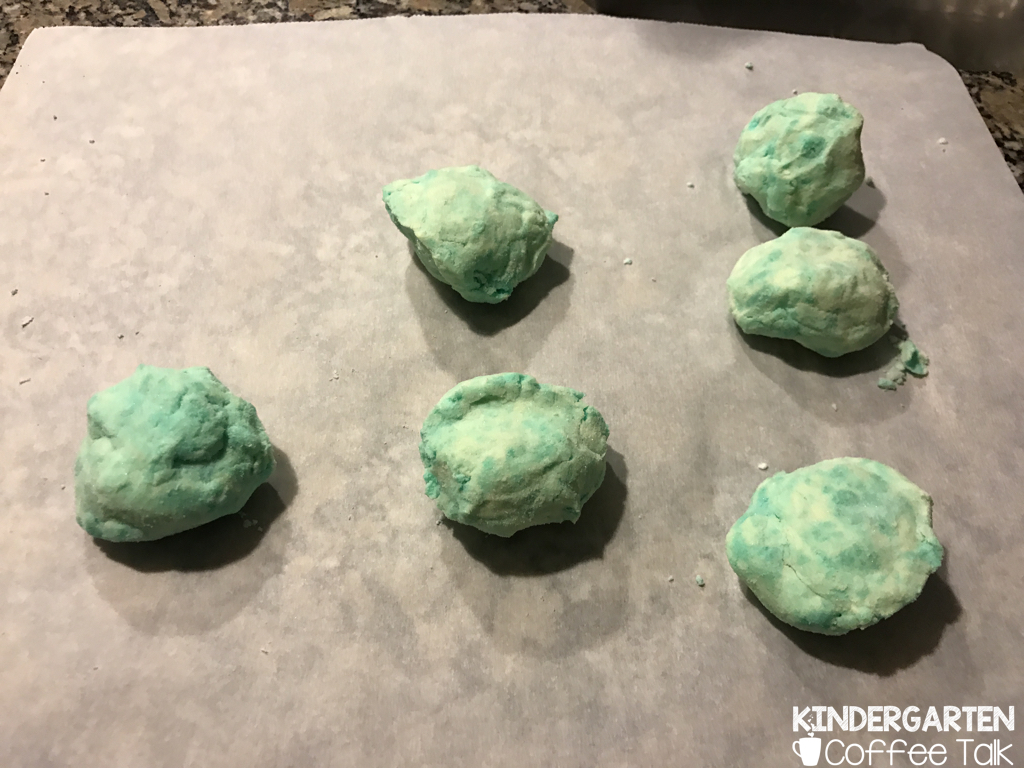
Leprechaun rocks are super easy to make.  All you need is gold coins, baking soda, water, and green food coloring.  Check out the Gift of Curiosity's blog post on how to make these.  When the leprechaun drops off these rocks, make sure to leave "water" in a bottle next to them... The last trick is that the water is actually vinegar.


So fun!

Shamrock Shakes are easy to make and so cute! We put a little green food coloring on the bottom of our cups, added a scoop of vanilla ice cream, poured Sprite on top, and then added rainbow sprinkles on top. 


And to top off our fun, we even had some St. Patrick's Day math interactive notebooks.
You can find these in my  Teachers Pay Teachers store if you are interested 

Happy St. Patrick's Day!


Tuesday, February 13, 2018

Valentine's Day "How To" Writing

In our classroom, we like to combine “how to” writing and sequencing. This week we are writing about how to make a Valentine’s Day card. I like to start by asking the class, how do you make a card for Valentine’s Day? It is always fun to hear their answers. I also read the book, “The Night Before Valentine’s Day” to help build a little background knowledge and excitement for the topic. Then, I had my students look at the sequencing pictures and help me put them in order.


After that, we read our shared reading book on our interactive whiteboard. This is fun because we can highlight the sight words we know. I usually read the book during the first reading and then my students help me during the second reading. It is a little hard to see, but I turned the Smart Notebook pen into a highlighter and we found words we knew.


We cut and pasted a sequencing page. 


Then, we made a card for our loved ones. I joined the fun by making a card for my parents :)


After all of the fun, we wanted to teach others about what we knew.  We are in the process of using the sequencing pictures and interactive writing to make a poster so we can hang it up and teach others. We will finish that up tomorrow!


I just love kid writing! It's the best!

You can find these activities in my Sequence and Write: How to Make a Valentine's Day Card unit on Teachers Pay Teachers.

Happy Teaching!


Monday, February 12, 2018

Polar Animal Inquiry


Learning about polar animals is always a favorite in January.  I love helping students learn that some of the animals they thought may have lived together actually live in different parts of the world. When doing research, I always like to start by allowing them to browse a non-fiction books about the topic to spark their interest and help them get ready to ask questions.  


Then, we sorted arctic and an arctic animals. This gives me some nice information about prior knowledge and student interest.  (Check out Simply Kinder's website for some Kindergarten ready videos) I find that while my students may not have strong background knowledge for this topic, once they see the videos, they are always excited to learn more. We also completed a “I see, I think, I wonder” chart.  This year, my students were super interested in penguins and fascinated by the narwhal.  


The kids always want to know how the animals stay warm in the cold waters.  The classic blubber glove experiment is a great science experiment to help kids through the scientific process. It is so great to see their hypotheses and then construct their own knowledge from the experiment.  Usually, kids think animals just have thick fur. We always take a look at walruses and wonder what they do because they don’t have fur like a polar bear.  The kids put their hands in the water with ice (this year I added some arctic animals from the Safari Toob) to see what that felt like.  Then, they tried the blubber glove and were amazed at the difference.  We used the left over water to grow our water beads and then put the animals from our experiment into the water beads. 


We also made these cute polar bear cups.  You will need ice cream cups, chocolate chips, and mini Nilla Wafers. 


During our literacy workstations, the students were able to use “snow” playdough, the Toob animals, and glass pebbles (from Michaels) on a mirror to tell stories. They also used the water beads for storytelling as well. The kids helped decide to split our water beads in half so that one tub could be Arctic animals and the other could be Antarctic animals. We could NOT mix the two...lol! These non-fiction books were in Chick-fil-a kids meals last year.  A student brought them in to share with the class.


Two of my favorite fiction books to read during this unit are “The Three Snow Bears” by Jan Brett and “Dear Polar Bear”.  “The Three Snow Bears” is an arctic version of “The Three Little Bears” and great for retelling or acting out.  “Dear Polar Bear” is a book about a lonely polar bear who writes letters to his bear friends around the world and a penguin postman who delivers them.  The best part about this book is a map in the beginning of the book that shows how the penguin traveled to each part of the world to deliver the letters.  


Click on the picture to go to Jan Brett's website

Click on the picture to go to Amazon to check out the book

The last part of our inquiry was about penguins.  We watched a penguin video from Scholastic News and read a non-fiction book about penguins. We learned that emperor penguins are 4 ft tall so we use a tape measure to draw an emperor penguin to scale on butcher paper.  Then, we stood next to the penguins to see how tall we were compared to a penguin. Then we learned how penguins kept their eggs in their feet so we used a ball to practice walking with an egg.  This brought about lots of laughs.  Then we huddled together for warmth.  


We ended the unit with a stem challenge. I froze the Toob animals in small mason jars. The kids were presented with the problem: Your animals are stuck in the ice.  You only have salt, a plastic spoon, and a plastic knife.  How will you get the animals out of the ice?


Happy Teaching!

Thursday, January 25, 2018

Easy and Fun Snowflake Activities for Kindergarten


Reading the book, Snowflake Bentley, was a nice catalyst to helping my students ask questions about snowflakes and really just get them interested in the topic.  The week earlier, I had tried to spark their interest through pictures, discussion, and some art projects.  While they truly enjoyed the art projects, they weren’t yet asking the questions I was hoping to get to spark deeper learning.
I stumbled across Snowflake Bentley and thought I’d give it a try.  I think everyone else may have known about the book, but to be honest, I hadn’t until I saw some cute clip art on Teachers Pay Teachers.  Apparently the clip art sparked my own person inquiry...lol.  We read the book in somewhat of an unconventional manner.  I had planned to just read the book all of the way through, but as we started reading it, my plans changed.  Seems to me that some of my best plans happen on the fly during the time I had planned to do something else.  Anyone with me? As we read, I stopped to ask questions of the kids that might have been going though Wilson Bentley’s head as he was trying to figure out how to catch and share the beauty of snowflakes. Some questions emerged such as:
*How do you catch a snowflake?
*Can you catch it in your hand?
*If you bring snow inside and it melts, what happens when you put it back outside? Does it turn back into snow?
*Will snow melt if you put it in a jar and close it?
*Do snowflakes just come from the sky?
*How do snowflakes form?


It was the perfect day for this activity because not only did we have snow on the ground, there were flurries throughout the day. We got out our magnifying glasses, making us feel like scientists (hello engagement!) and got to work. Finally, as we read about how Snowflake Bentley captured them in his pictures, we came up with an idea. We got into groups, put black paper on trays, got our magnifying glasses, and went outside. Finally, we were able to catch snowflakes and have them stay together long enough for us to look at them with our magnifying glasses (unfortunately, not long enough for a good picture). Huzzah! We were victorious!

Since that time, we have learned that snowflakes have six points, are shaped like a hexagon, and are formed from tiny specks in the clouds.  We have been retelling the main idea and three important details from the book.


The headers for our retelling can be found here. They are part of my retelling pack for fiction and non-fiction books.


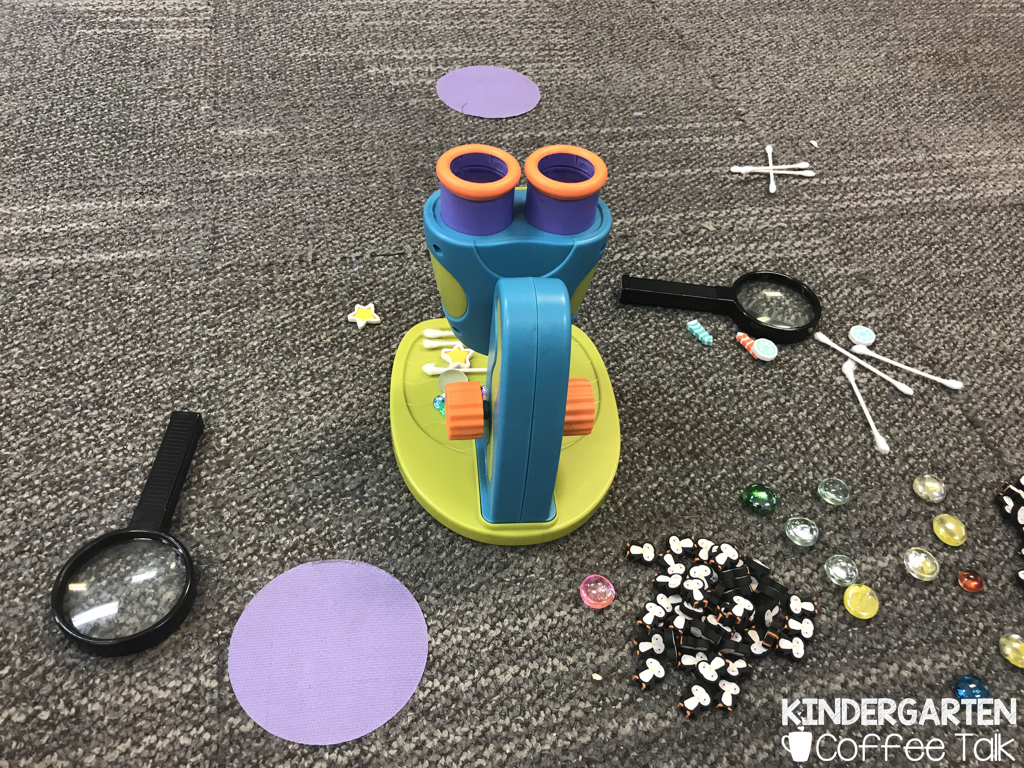
We have also been learning about the difference between a magnifying glass and a microscope and exploring both of those tools. Science is cool!


Once we were excited about snowflakes, I put out a Snowflake provocation which sparked some writing as well. 


This was so fun after exploring snowflakes!

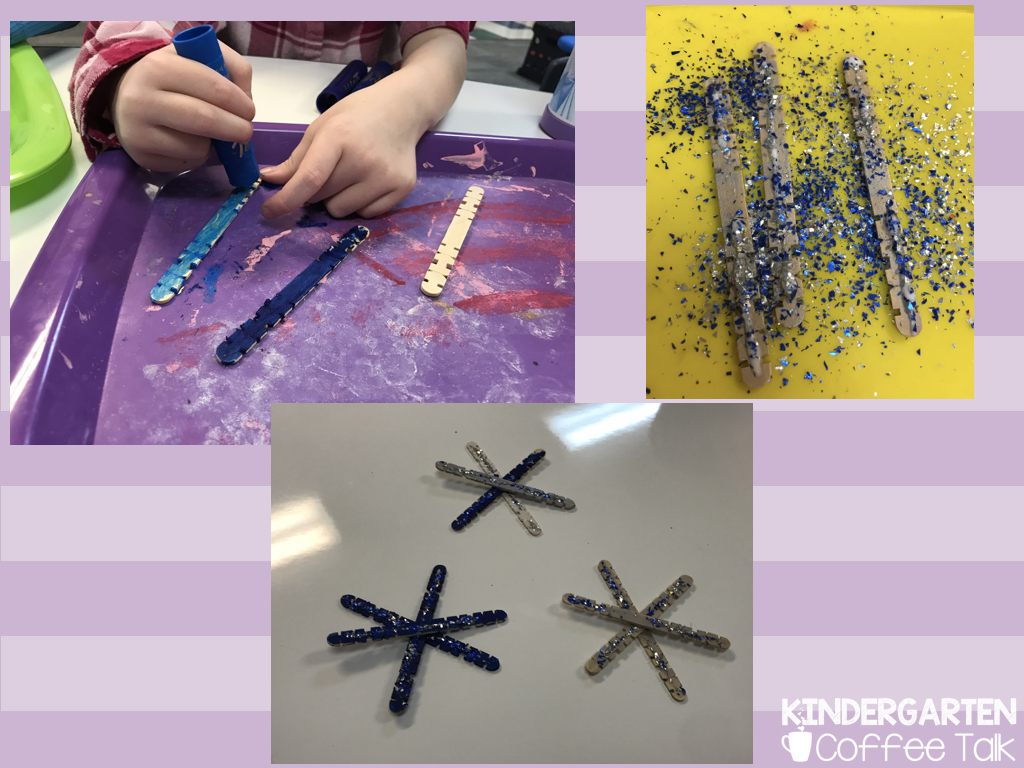
We also had fun with an easy art project. We painted craft sticks with Kwik Stix paint (if you haven't tried them, you must! They are paint sticks that go on like a glue stick and dry in 60 seconds.  If you'd like to try them yourself, you can click the link above and use the code COFFEETALK10 to get 10% off.), squeezed some glue on top, added a little glitter, glued the sticks together, and we made beautiful snowflakes. The picture does not do the final product justice!


Happy Teaching,


Disclosure: Some of the links in this post are affiliate links, meaning, at no additional cost to you, I will earn a commission if you click through and make a purchase.

Sunday, October 23, 2016

Teaching Through Themes: Fire Safety Week

This past week we learned all about fire safety. In preparation for this week, I had a discussion with my class about fire safety and learned we had a lot of misconceptions. Our fall break (yay!) fell during the middle of that week so I decided to postpone it so that we could spend a full week learning how to be safe.

Click on the picture to go to NFPA's website

We started off the week by talking about our schema and what questions we had about firefighters and fire safety. Then we spent some time looking at non-fiction text to help us label an color a firefighter and fire truck. Looking closely at non-fiction text has helped us realize that we can get our questions answered through books. It has also helped us label and have our colors make sense in our pictures when writing.


We had some fun making a replica of a hook and ladder truck! We used Boo Berry cereal as the firefighter driving the truck and a small marshmallow as a siren.


 Then, we made firefighter hats and put out some fires. I found this idea here and had to do it! We took a field trip to one of the fire extinguishers in our school to check it out. Then we made a fire out of tissue paper in our cups. We added baking soda and sprayed in vinegar to watch the "fire extinguisher" put out the fire.  


Can we say fun?! We also read a firefighter emergent reader so we could practice sight words and vocabulary.  


And our shared reading was all about being safe if there is a fire. Here is one of the pages:


Throughout the week we also played this great firefighter game from consumersafety.org


What do you do for Fire Safety Week?


Happy Teaching!


Tuesday, June 28, 2016

Text Dependent Questions: Chapter 1

I am so excited to be back at blogging.  Trying to find time to blog with a 3 year old and 3 month old has been a new adventure, but I am slowly learning how to make it work.  One of my favorite things to do is read professional development books (#totalnerd) so I thought this was the perfect way to get back into blogging!

I am so excited to be linking up with Mrs. Wills Kindergarten for her book study!  Her blog has been super helpful to me over the years!


One of the fabulous things about my job is that I have the freedom to choose my own books. When I read this chapter I kept hearing myself say yes! this is exactly what I need to do. From now on, I will be using the four phases of close reading when picking books. Not all books are appropriate for close reading...which has been my hang up in the past. It is going to take some practice to pick books out in this way, but I am excited to try.


I like the idea of giving my kids a space to struggle. Questions that fall into our students' zone of proximal development is a sweet spot where we see the most growth. The authors tell us that the amount of support we give in our students' struggle is on a continuum.  We have to remember that as a class e are learning how to read books just as much as we are learning about the author and book itself. For us as teachers, we also have to remind ourselves that it is about practice not perfection. We need to allow ourselves space to struggle with this new teaching practice as well.


I love trying out new practices in my classroom. This is especially true when they are taking my class into a direction that follows best practice! It really can be a messy practice. Muddling through something new does not always go right the first time (so hard for me!), but getting messy is the best way to learn how to integrate new practices into your own teaching style.  


I look forward to getting more practice with the four phases of close reading. I feel like I am building an anchor chart in my head to refer to when picking books and for lesson planning. My first a-ha moment is the organization and understanding I am beginning to feel around close reading. My second a-ha is collaboration between teachers and students as well as the class learning from each other. We, as a class, are learning how to learn from books together.

Looking forward to chapter 2!